


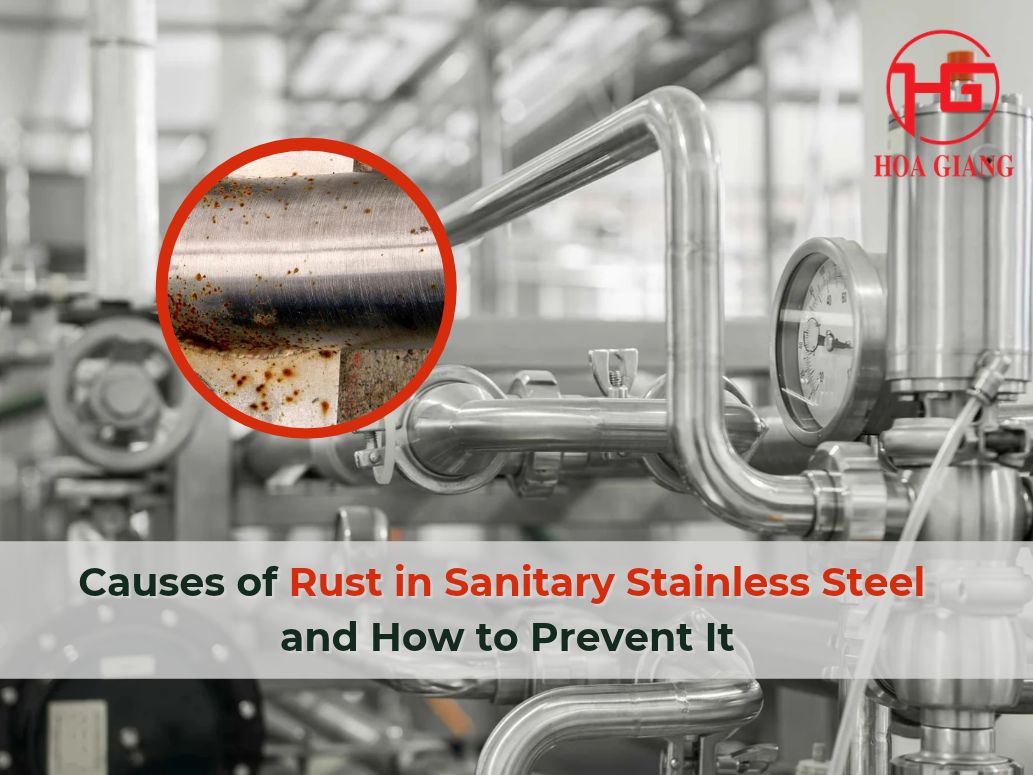
Sanitary stainless steel is commonly used in food, beverage, and pharmaceutical production systems due to its corrosion resistance, easy-to-clean surface, and high durability. However, under certain operating conditions, sanitary stainless steel pipes, tanks, and fittings may still show signs of rust or corrosion.
So what causes stainless steel sanitary ware to rust? This condition can stem from the material, chemicals, processing methods, or cleaning techniques. Identifying the correct cause helps businesses choose appropriate solutions and prevention methods. Let’s explore the detailed article below with Hoa Giang.
Does stainless steel used in sanitary applications rust?
Stainless steel with a biocompatible nature offers corrosion resistance due to a passive oxide film formed on its surface, but this protection is not absolute. Under unsuitable operating conditions, such as exposure to chlorine-containing chemicals, iron contamination during processing, or the accumulation of dirt and grime, the passive film can be broken down, leading to rust and localized corrosion.
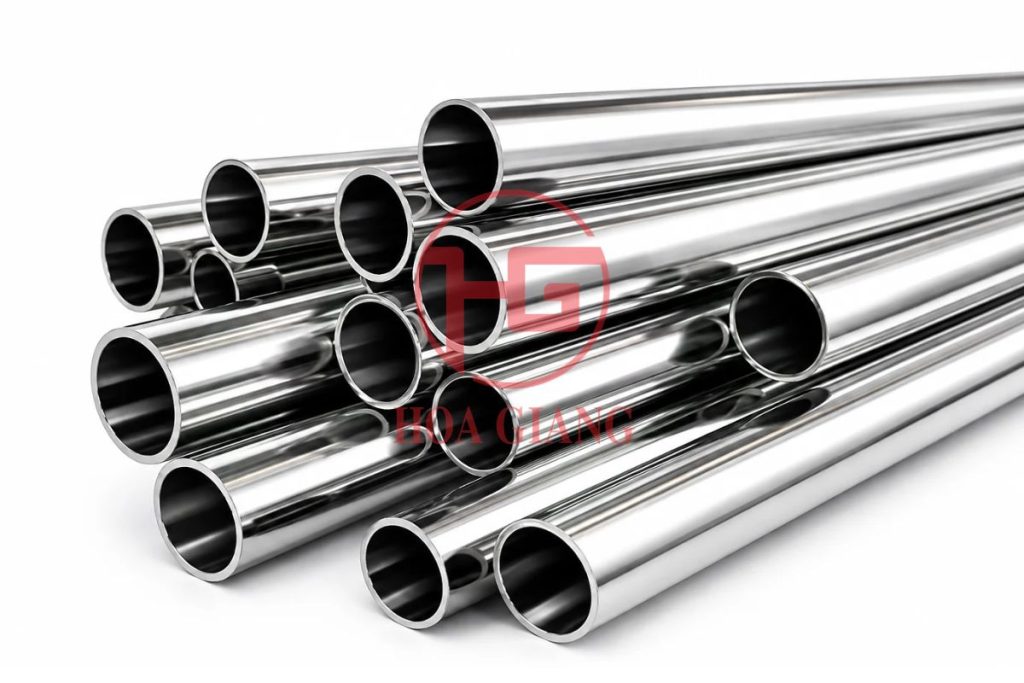
Stainless steel sanitary pipes
Essentially, sanitary stainless steel is not a separate steel grade but rather a group of stainless steel materials used in systems requiring high levels of hygiene. Commonly used grades include SUS 304, 304L, 316, and 316L. Each type has a different alloy composition and corrosion resistance, and selection should be based on the fluid characteristics, cleaning chemicals, and operating conditions of the system.
The corrosion resistance mechanism of stainless steel
Stainless steel is corrosion-resistant thanks to its chromium (Cr) content. When exposed to oxygen, chromium forms a very thin, passive oxide film on the surface, preventing the metal from directly contacting corrosive agents.
This protective film has the ability to regenerate itself when the surface is clean and exposed to suitable oxygen conditions. However, chlorine, corrosive chemicals, or metallic impurities can weaken the protective layer, creating conditions for localized corrosion to occur.
Distinguishing between surface rust and corrosion of stainless steel.
Not all brown rust stains on stainless steel are due to corrosion of the base material.
- Surface iron contamination causes rust:Iron particles from machining tools, workbenches, or metal dust adhere to stainless steel, then oxidize upon contact with moisture and oxygen.
- Direct corrosion:The passive film is broken down, exposing the base metal to attack, forming pits or corrosion zones on the surface.
Distinguishing between these two phenomena helps in selecting the appropriate treatment method and avoiding misjudging the material’s condition.
6 reasons why stainless steel sanitary ware rusts
Choosing the wrong type of stainless steel
Each grade of stainless steel has a different alloy composition and corrosion resistance. If the material is incompatible with the fluid, cleaning chemicals, or operating temperature, the risk of rust will increase.
Stainless steel 304 has good corrosion resistance in many common environments. Meanwhile, stainless steel 316 is supplemented with molybdenum (Mo), which increases its resistance to pitting and crevice corrosion, especially in chlorine-containing environments.
Therefore, it is necessary to assess the material’s suitability rather than simply choosing based on popularity. Even 316 stainless steel has corrosion resistance limits depending on chemical concentration and temperature.
Exposure to chlorine-containing chemicals
CloThis is a common cause of localized corrosion on stainless steel. This ion can disrupt the passive film, creating corrosion trigger points on the surface.
Chlorine can originate from:
- Saltwater or ingredients containing a high salt content.
- Seawater and the surrounding environment contain salt.
- Cleaning and disinfecting chemicals containing hypochlorite.
- The cleaning solution is not compatible with stainless steel.
When exposed for extended periods, especially at high temperatures or in areas where the solution remains, chlorine can causePitting CorrosionSmall pores can develop deep into the material, becoming places where dirt and grime accumulate and are difficult to clean.
Iron contamination during processing and installation.
During cutting, grinding, polishing, or installation, iron particles from carbon steel tools can adhere to the stainless steel surface. When exposed to moisture and oxygen, they oxidize and form reddish-brown rust spots.
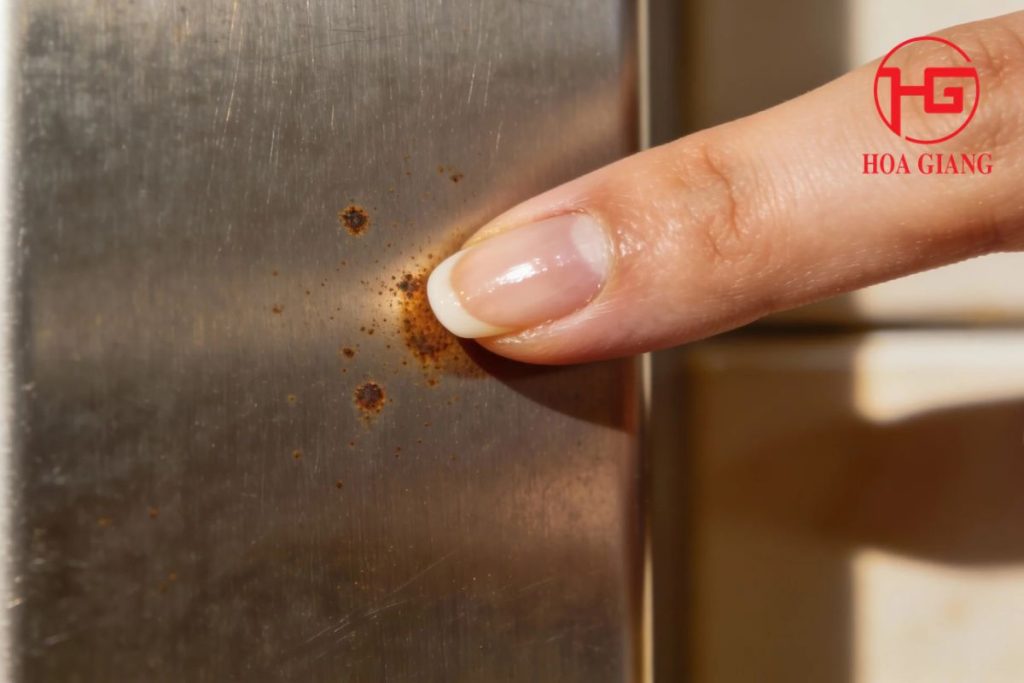
The stainless steel surface is contaminated with iron.
This situation usually occurs when:
- Use the same tools for machining stainless steel and carbon steel.
- Use a carbon steel brush to clean stainless steel.
- Place stainless steel near areas where regular steel is cut, ground, or welded.
- The pipelines were not protected from metal dust during storage and transportation.
To minimize iron contamination, specialized tools for stainless steel must be used, and the processing and installation environment must be carefully controlled.
The welds and surface treatment are unsatisfactory.
High temperatures during welding can create a thermal oxide layer on the surface, often appearing as yellow, blue, purple, or black bands around the weld. The area beneath the oxide layer may experience a decrease in chromium content, reducing its corrosion resistance.
In addition, welds with gaps, cracks, or rough surfaces can easily trap fluids and debris, creating conditions for formation.Crevice corrosion.
To ensure surface quality, welding techniques must be carefully controlled and appropriate processing steps must be carried out:
- Pickling (oxidation removal):Remove the thermal oxide layer and the affected surface area after welding.
- Passivation:Removes free iron and suitable impurities, supporting the formation of a passive film.
- Electropolishing:Improves surface smoothness, reducing areas prone to dirt accumulation in applications requiring such treatment.
Accumulation of dirt, moisture, and chemicals.
Residue, mineral salts, and chemicals can accumulate in sections of pipes with poor flow rates, flanges, joints, or areas with slow flow.
When chlorine-containing solutions are retained and concentrated due to evaporation, local salt concentrations increase, raising the risk of pitting corrosion. Simultaneously, narrow crevices and surfaces covered with deposits can create conditions conducive to the formation of crevice corrosion.
Therefore, the system needs to be designed for good fluid drainage, minimize dead leg areas, and ensure the cleanliness of all product contact surfaces.
Improper cleaning and maintenance procedures
Using inappropriate chemicals or cleaning tools can weaken the passive coating and cause the stainless steel to rust.
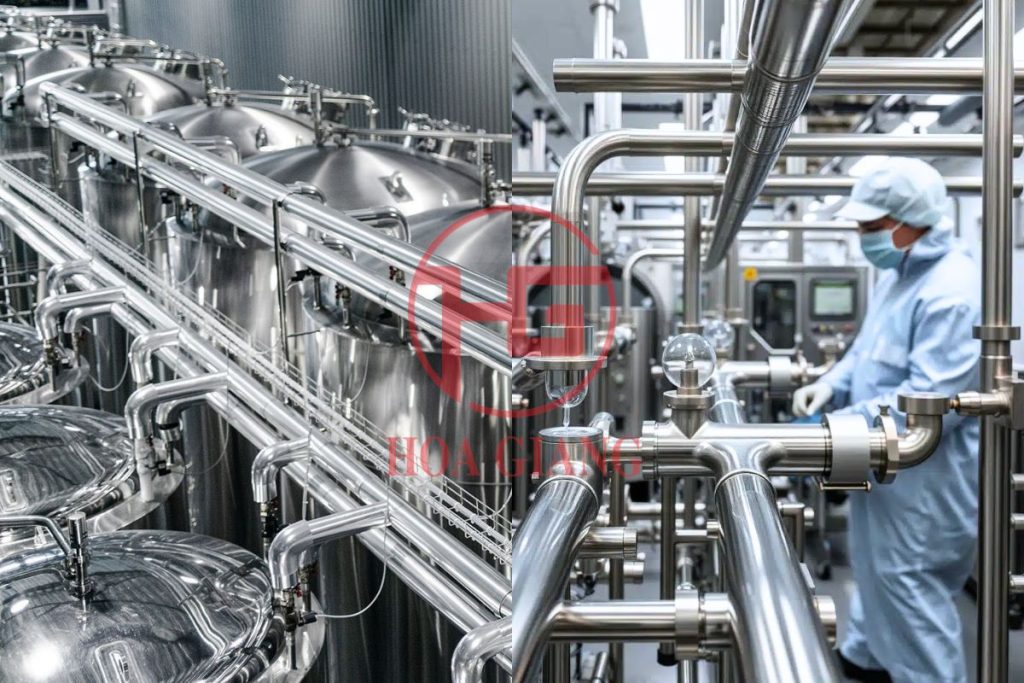
Stainless steel sanitary piping in the factory
Some common mistakes include:
- Using cleaning agents containing chlorine or hypochlorite at inappropriate concentrations.
- Use hydrochloric acid (HCl) to clean stainless steel.
- Use a steel wool pad or a carbon steel brush to scrub the surface directly.
- Do not rinse thoroughly after cleaning with chemicals.
- The temperature and contact time of the solution were not controlled.
For on-site cleaning (CIP) systems, it is necessary to control chemical concentrations, temperature, circulation time, and rinsing efficiency according to the system’s technical requirements.
How to deal with rust on stainless steel sanitary ware.
Before treatment, it is necessary to determine whether the rust originates from surface iron contamination or direct corrosion of the material.
For rust caused by surface iron contamination:
- Use specialized cleaning chemicals that are compatible with stainless steel.
- Adhere to the recommended concentration and exposure time guidelines.
- Rinse thoroughly with clean water after treatment.
- Do not use carbon steel tools to scrub the surface.
For actual corrosion:
If deep pitting, corrosion at welds, or material damage is present, the extent of the damage should be assessed before selecting a treatment option.
Depending on the condition, deoxidation, rust removal, passivation, polishing, or replacement of corroded parts may be applied. In particular, areas where metal has been lost due to deep pitting corrosion cannot be restored by surface cleaning alone.
For equipment that comes into direct contact with food and pharmaceuticals, the sanitary conditions after processing must be checked and verified before being put into operation.
How to prevent stainless steel sanitary ware from rusting.
Choosing the right grade of stainless steel
Determine the fluid composition, chemical concentration, temperature, and sanitary conditions before selecting stainless steel 304, 304L, 316, or 316L.
Machining quality control
Use specialized tools for stainless steel to minimize iron contamination during manufacturing and installation. Welds must be performed correctly, treated with thermal oxides, and surface finished to meet the hygiene requirements of the system.
Use appropriate cleaning chemicals.
Choose cleaning chemicals that are compatible with the stainless steel grade, and control the concentration, temperature, and contact time. After each cleaning cycle, rinse thoroughly to remove any remaining chemical residue and dirt.
Designing a system to limit fluid retention.
Pipelines, joints, and fittings must ensure proper fluid drainage, minimizing gaps and dead zones. For CIP systems, it is essential to ensure the cleaning solution reaches all surfaces to be cleaned and is completely flushed out after each cycle.
Regular inspection and maintenance
Focus on inspecting welds, connections, valves, and areas prone to dirt buildup. Signs such as discoloration, rust spots, or pitting should be assessed early to identify the cause and address it promptly.
Hoa Giang – Exclusive distributor of GHWA sanitary stainless steel in Vietnam
As the exclusive distributor of GHWA brand sanitary stainless steel in Vietnam, Hoa Giang offers a diverse product portfolio to meet the installation and operation needs of production systems in the food, beverage, pharmaceutical, and many specialized industrial sectors.
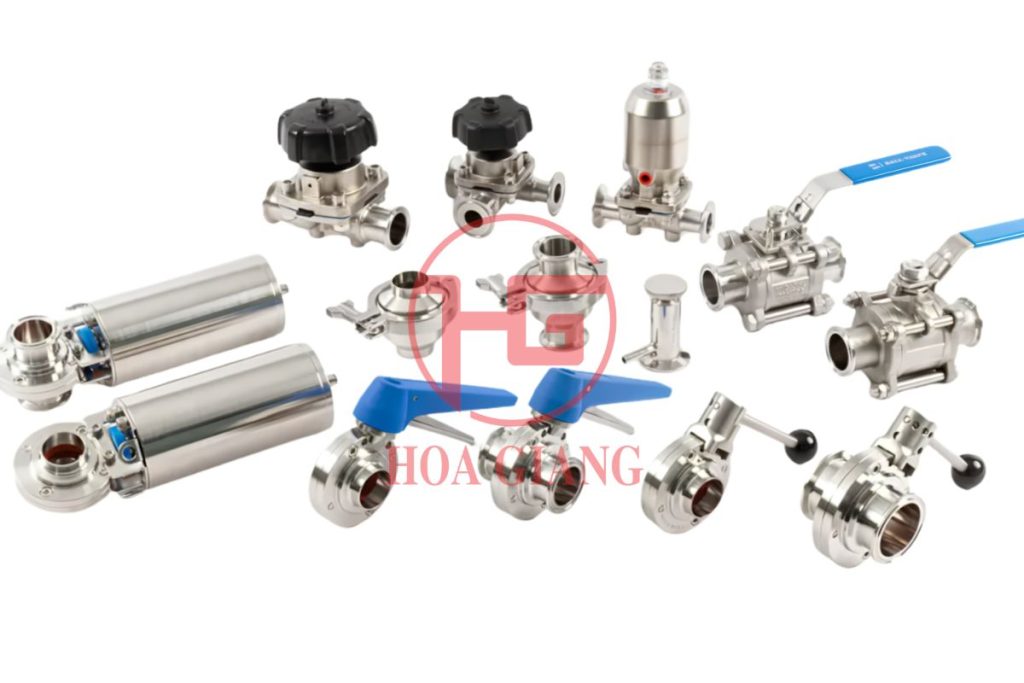
Sanitary stainless steel supplied by Hoa Giang
In addition to its supply capabilities, Hoa Giang focuses on providing in-depth technical consulting, supporting customers in selecting materials, specifications, and solutions suitable for the fluid characteristics and actual operating conditions. This enables businesses to control system quality, minimize corrosion risks, and meet hygiene requirements in production.
Conclude
Stainless steel sanitary ware can rust due to unsuitable materials, surface iron contamination, chlorine-containing chemicals, faulty welds, or inadequate cleaning processes. To mitigate this, businesses need to implement comprehensive control from material selection, processing, and surface treatment to the final product. Operation and maintenance.
Contact Hoa Giang for detailed advice on the GHWA sanitary stainless steel product range and to choose the right material solution for your company’s system.
Address: 19 Bach Dang Street, Tan Son Hoa Ward, Ho Chi Minh City
Phone: (028) 38485518~9
Facebook: Hoa Giang Stainless Steel