


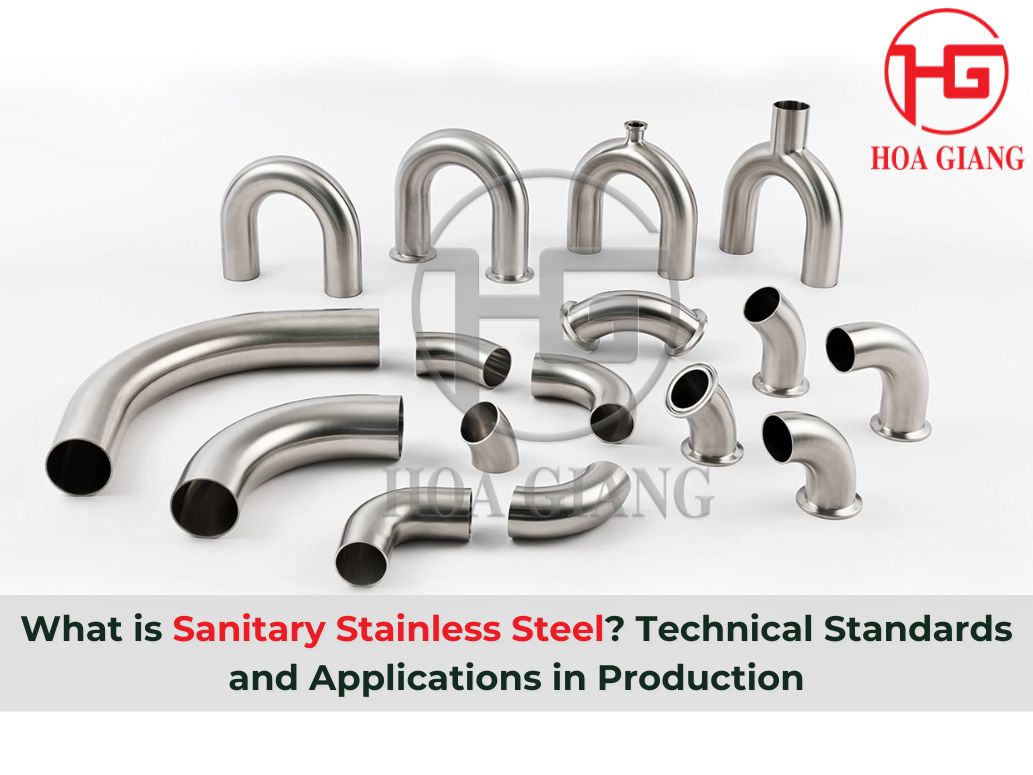
Sanitary stainless steel is an indispensable material in industries requiring strict hygiene standards such as food, beverages, pharmaceuticals, and cosmetics. So what makes sanitary stainless steel a mandatory standard in modern factories? How does it differ from regular stainless steel, what technical standards must it meet, and where is it applied? Let’s explore the details in the article below.
What is sanitary stainless steel and why is it mandatory in the food and pharmaceutical industries?
Sanitary stainless steel is a term referring to a group of stainless steel materials and equipment manufactured according to strict sanitary standards, aiming to eliminate dead legs, gaps, and rough welds – areas where microorganisms can accumulate and grow during the manufacturing process.
Unlike conventional industrial stainless steel, sanitary stainless steel products, including sanitary stainless steel pipes, sanitary stainless steel fittings, and sanitary valves, are designed with smooth inner surfaces, absolutely airtight joints, and the ability to be cleaned in place (CIP – Clean In Place) or sterilized in place (SIP – Sterilize In Place).
Three key identifying characteristics of a standard sanitary stainless steel system:
- The inner surface of the pipe is polished to the required roughness for the industry, free from scratches, air bubbles, or burrs.
- The welds are made using automated TIG orbital welding technology, ensuring a flat, smooth weld seam without bumps or depressions, and without gaps that can harbor microorganisms.
- The overall design minimizes dead corners, using specialized clamp or flange connections instead of conventional screw threads.
The difference between sanitary stainless steel and regular industrial stainless steel.
Industrial stainless steel (used in construction and mechanical engineering) only needs to meet basic requirements for mechanical strength and corrosion resistance.
Meanwhile, stainless steel used in biodegradable applications must simultaneously satisfy three factors: food safety and hygiene, ease of cleaning, and resistance to chemical corrosion from strong acidic or alkaline cleaning and sterilizing solutions.
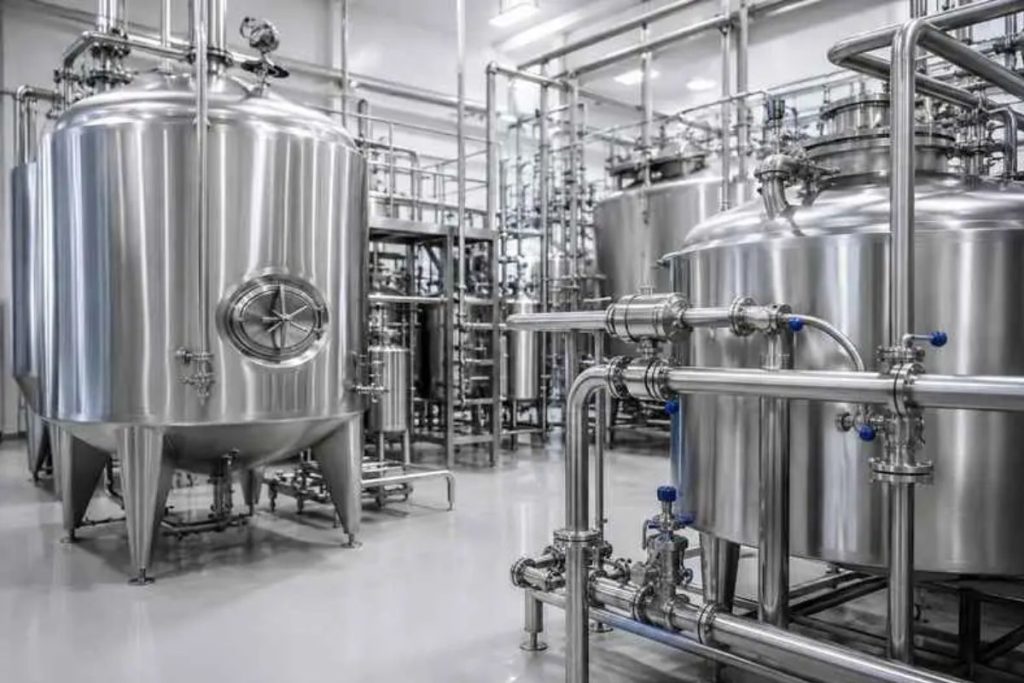
Sanitary stainless steel meets stringent standards.
Therefore, regardless of whether they use 304 or 316L stainless steel, sanitary products always come with much stricter requirements regarding dimensional tolerances, surface roughness, and material certifications compared to common stainless steel.
Technical standards applicable to sanitary stainless steel.
The selection of sanitary piping and fittings should be based on the standards applied by the plant, as each standard specifies different nominal diameters, wall thicknesses, and connection types.
DIN Standard – European Stainless Steel System
DIN is a German standard, most commonly used in Vietnam and Europe, that specifies pipe dimensions based on the outside diameter (OD) in millimeters. This standard is divided into several series (Series 1, Series 2, Series 2.1, etc.) corresponding to different wall thicknesses, serving both low-pressure and medium-pressure applications in the food and cosmetics industries.
SMS Standard – Nordic System
SMS standard originates from Sweden, initially developed for the dairy industry, and is now widely used throughout the food and beverage industry in many Asian countries, including Vietnam. The difference between the SMS and DIN systems lies in the outer diameter and the type of thread used in clamp connections. Therefore, when designing the system, it is necessary to clearly identify which standard the factory is following to avoid discrepancies when installing accessories.
Standard 3-A
The 3-A Sanitary Standards are a set of American standards, issued by the 3-A SSI organization, focusing on sanitary design requirements for dairy and food processing equipment. This standard places particular emphasis on self-draining capabilities, ease of disassembly for cleaning, and the complete elimination of dead zones in valve, pump, and tank structures.
ASME BPE Standard – For pharmaceuticals and biotechnology
For high-end pharmaceutical, biotechnology, or cosmetic projects, technical requirements often exceed standard food-grade requirements. The ASME BPE (Bioprocessing Equipment) standard from the United States is currently the most stringent.
In parallel with the specialized industry standards mentioned above, some ISO standards such as ISO 1127 (which specifies the dimensions of stainless steel pipes in the metric system) or standards on the chemical composition of steel grades (corresponding to EN 10088) are also frequently cited in technical documents to verify the origin and quality of the base steel before processing it into microbial products.
Common stainless steel grades used in sanitary ware: 304 and 316L
Choosing the right steel grade is crucial to the lifespan and safety of the system, and it depends directly on the chemical properties of the production environment.
Applications of 304 stainless steel in sanitary applications.
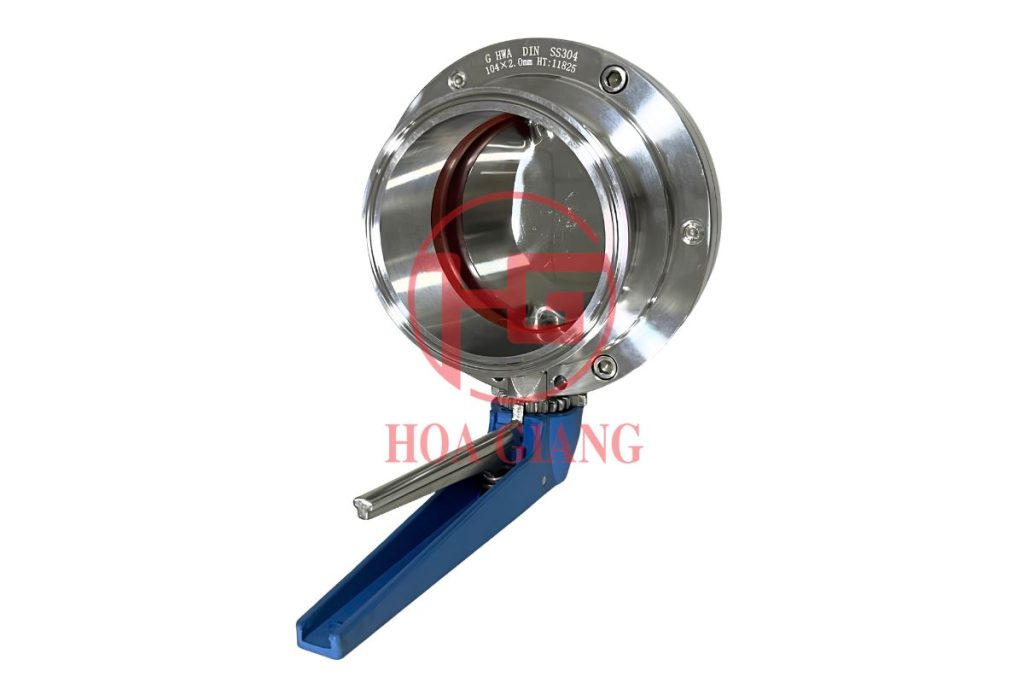
Hoa Giang supplies stainless steel 304 clamp-on butterfly valves.
304 stainless steel, containing approximately 18% chromium and 8% nickel, offers good corrosion resistance in neutral environments, making it suitable for most applications in the beverage, beer, dairy, and general food processing industries.
316L stainless steel for sanitary use.
316L stainless steel for sanitary use. The addition of 2-3% molybdenum significantly enhances corrosion resistance, especially in chloride-containing environments such as high-concentration CIP cleaning solutions, brine, or buffer solutions used in pharmaceutical preparation.
Therefore, the 316L grade is almost a mandatory requirement in high-end pharmaceutical, cosmetic, and biotechnology projects where it is commonly applied.
Structure of a complete microbiological piping system
A standard sanitary piping system is not just about the pipes themselves, but a synchronized assembly of many components, each of which must comply with the same standards to ensure compatibility during installation.
Stainless steel sanitary pipes
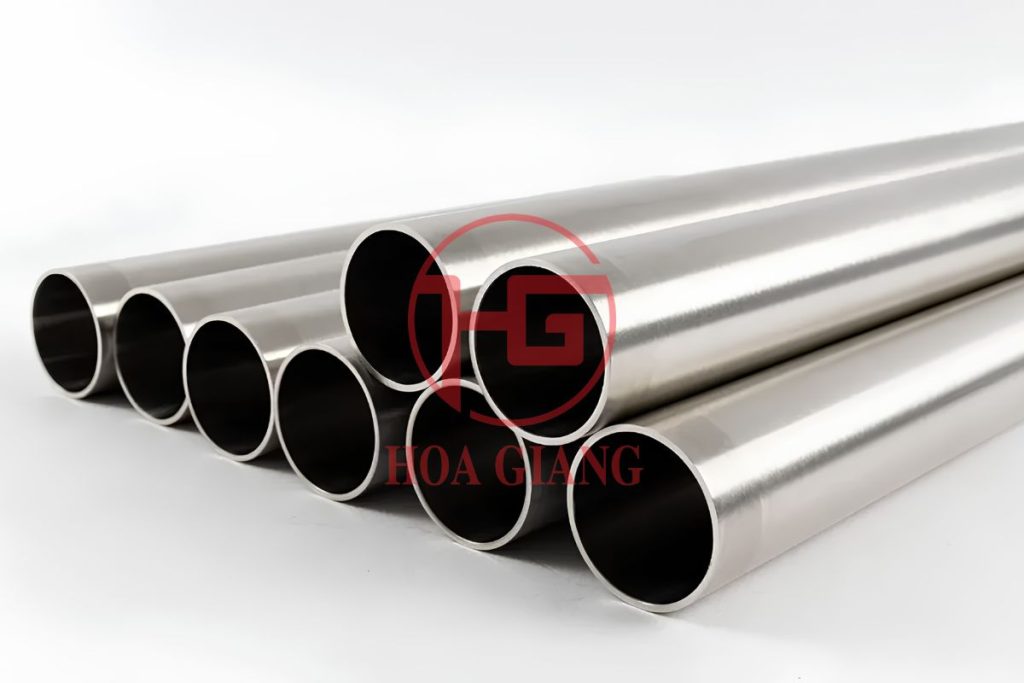
Stainless steel sanitary pipes supplied by Hoa Giang.
Stainless steel sanitary tubing is the main component, manufactured using automatic arc welding (Orbital Welding) from coiled steel sheets, then polished on the inside and outside surfaces to the required level. Common diameters range from DN25 to DN200 depending on the factory size, with the wall thickness calculated according to the actual working pressure of the system..
Stainless steel sanitary fittings
All sanitary stainless steel fittings must be manufactured with an appropriate radius of curvature to prevent vortex formation in the flow, and the weld surface at the joint must be polished to the same roughness level as the pipe body.
Microbiological valve
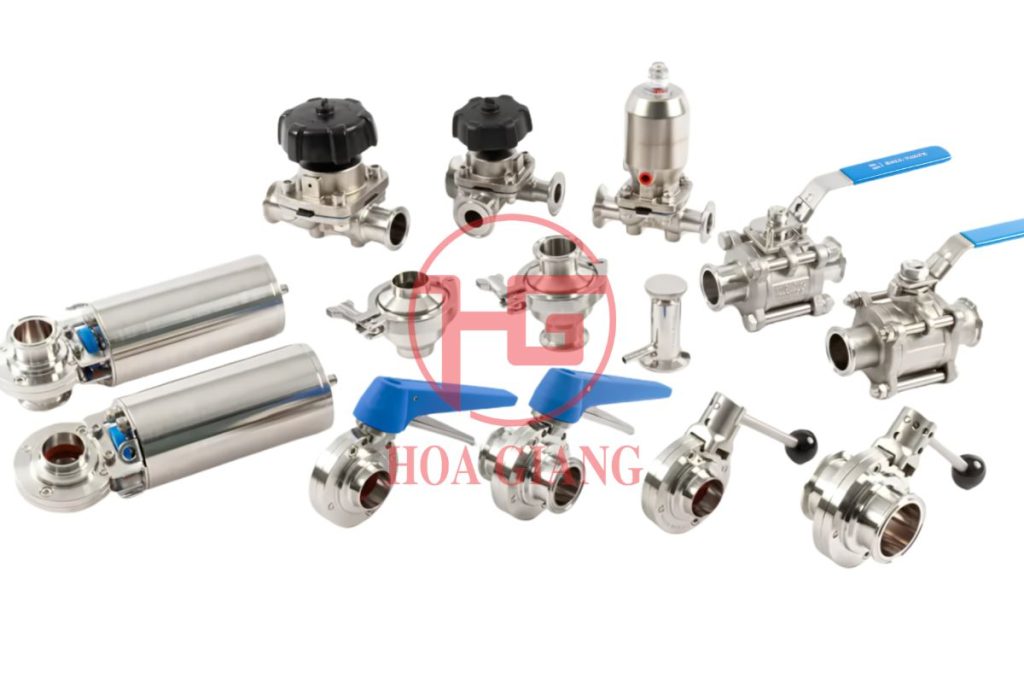 Biological valves supplied by Hoa Giang
Microbiological valve closed Its role is to control and interrupt the flow. The core difference between sanitary valves and industrial valves is that the sealing gasket is made from food-grade material, capable of withstanding saturated steam sterilization temperatures (typically above 121°C) without deformation or the generation of microplastic particles.
Gaskets, clamps, and connecting accessories
The tri-clamp connection system uses a food-grade rubber gasket sandwiched between two flanges, tightened with stainless steel clamps, allowing for quick disassembly for routine cleaning without the need for cutting or re-welding.
Practical applications of bio-stainless steel in manufacturing plants.
Food and beverage industry
In breweries, beverage factories, dairy plants, and food processing facilities, stainless steel sanitary systems are used throughout, from the raw material receiving area and fermentation tanks to the bottling pipelines and the overall CIP system.
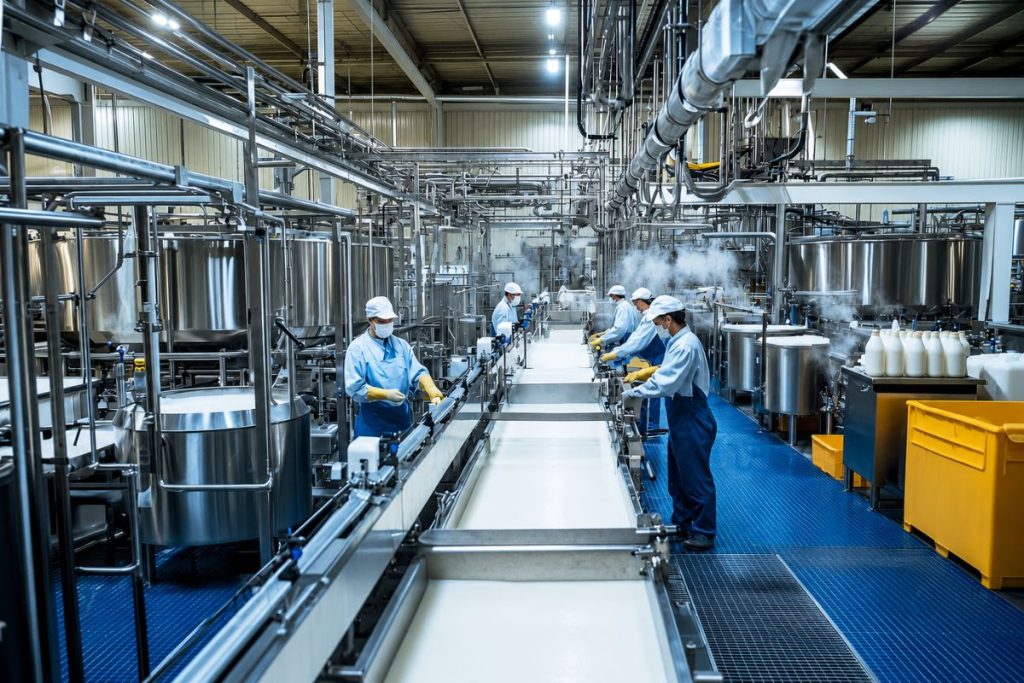
Stainless steel for hygienic use in dairy factories.
Pharmaceutical and cosmetic industry
For production lines of high-end injectable solutions, liquid medicines, or cosmetics, the purity requirements for water (Water For Injection – WFI) and semi-finished solutions necessitate a piping system that meets electrolytic grade standards, uses grade 316L, and strictly adheres to established standards.
Biotechnology
In factories producing vaccines, enzymes, or biological preparations, the bioreactor system and connecting pipelines must be absolutely free of dead zones to prevent cross-contamination between culture batches. This is the field with the most stringent technical requirements regarding materials.
Criteria for selecting suitable sanitary stainless steel for the project.
Before creating the materials documentation, engineers and the purchasing department should clearly identify the following factors to avoid discrepancies during installation and acceptance testing:
- Determine the standard sizing system applicable to the entire plant to ensure consistency between pipes.stainless steel sanitary fittings and microbiological valve.
- Determine the appropriate steel grade based on the chemical properties of the product and the cleaning solution used in the CIP/SIP process.
- A material mill certificate is required in accordance with the standard.
- Inspect the orbital welding capabilities of the fabrication unit, as the quality of the weld directly affects the durability and long-term hygiene of the system.
Frequently Asked Questions
How does sanitary stainless steel differ from regular stainless steel sold on the market?
Sanitary stainless steel and regular stainless steel may have the same base steel grade, but they differ in the processing method. Sanitary stainless steel products are subject to much stricter dimensional control than regular stainless steel.
When should you choose 316L stainless steel instead of 304 for a microbiological system?
Which one should I choose?316L stainless steel for sanitary use. This is especially relevant when the system is frequently exposed to highly corrosive solutions such as saltwater, high-concentration CIP solutions, or when the project is in the pharmaceutical or high-end cosmetics industry requiring specific standards.
How should a stainless steel sanitary ware system be maintained to ensure its longevity?
Regular CIP cleaning should be performed according to recommended concentrations and temperatures, and the rubber gaskets at the clamp joints should be checked periodically as these are fast-wearing parts. Also, avoid using cleaning tools containing chlorine or metal brushes that can scratch the polished surface.
Is there a significant difference in investment costs between a 316L stainless steel system and a 304 stainless steel system?
The cost of 316L stainless steel is usually higher than 304 depending on the current raw material price, but its superior lifespan and corrosion resistance help reduce maintenance and replacement costs in the long term, especially in harsh production environments.
Hoa Giang – A Provider of High-Quality Sanitary Ware Stainless Steel Solutions
With nearly 20 years of experience in supplying sanitary stainless steel, sanitary stainless steel fittings, sanitary valves, and sanitary piping solutions, Hoa Giang accompanies businesses in the food, beverage, pharmaceutical, cosmetic, and biotechnology industries in Vietnam, from technical consulting and selecting appropriate standards to installation and system acceptance.
If your business needs advice on sanitary stainless steel materials that meet standards for a new factory project or an upgrade of an existing production line, please contact Hoa Giang’s technical team for a survey and detailed quotation tailored to the specific technical requirements of each project.
Address: 19 Bach Dang Street, Tan Son Hoa Ward, Ho Chi Minh City
Phone: (028) 38485518~9
Facebook: Hoa Giang Stainless Steel