

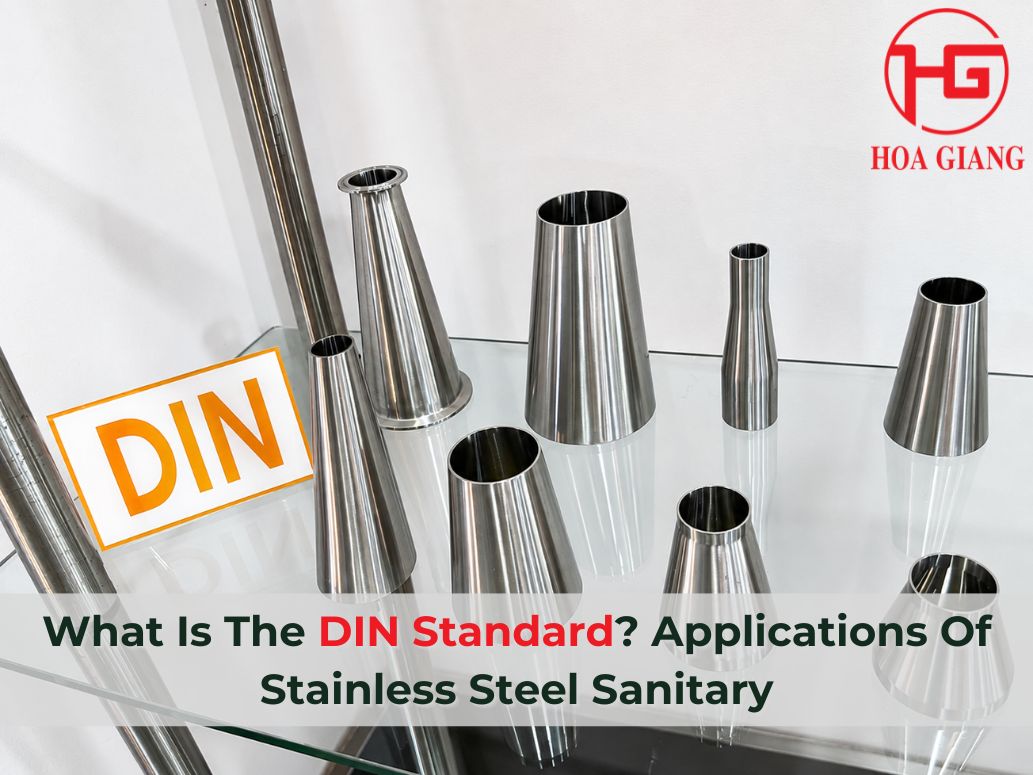
The DIN standard is one of the most widely applied technical specifications today in industries requiring absolute cleanliness, such as food processing, beverages, pharmaceuticals, and cosmetics.
So what is the DIN standard? What does this symbol mean regarding the quality of the stainless steel sanitary ware system? Let’s explore the details with Hoa Giang in the article below.
What is the DIN standard?
DIN is the abbreviation for Deutsches Institut für Normung e.V. (German Institute for Standardization). Established in 1917, DIN is the organization responsible for developing and issuing technical standards applicable to most industries in Germany, and is also Germany’s representative in the International Organization for Standardization (ISO).
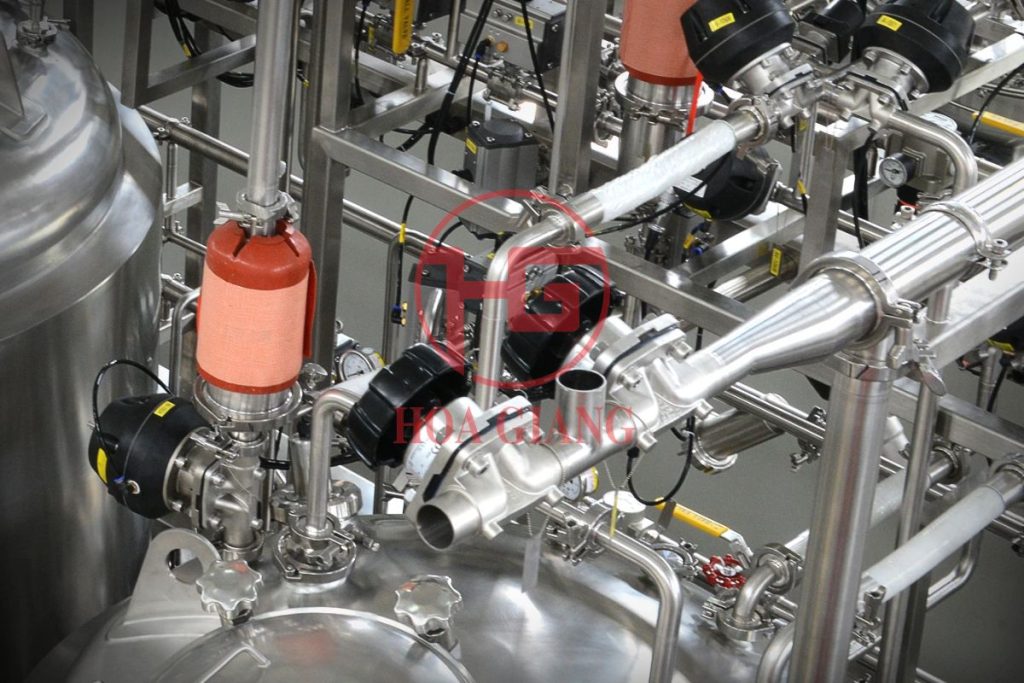
DIN standards ensure consistency and strict quality control for equipment.
A product or component that meets DIN standard this means it has undergone a rigorous testing process regarding:
- Dimensions & Tolerances: Ensuring absolute precision allows components to be easily disassembled and replaced seamlessly across different systems.
- Mechanical Properties & Materials: Meets the design specifications for strength, pressure resistance, and temperature resistance.
- Safety & Hygiene: Meets technical specifications for surface scratch resistance, anti-adhesion properties, and chemical resistance.
The significance of DIN standards in the sanitary stainless steel industry.
Unlike ordinary industrial or decorative stainless steel, stainless steel for sanitary use both the inside and outside surfaces must be polished smooth. This prevents the formation of plaque, bacteria, and mold. DIN standard It serves as a “benchmark” to determine the microbiological safety of pipes and fittings.
The most common DIN standards for sanitary stainless steel:
DIN 11850 (Dimensions of stainless steel sanitary pipes)
This standard specifies the outer diameter (OD), inner diameter (ID), and wall thickness of pipes in metric units (from DN10 to DN300). It is divided into size ranges (Series 1, Series 2, Series 3, etc.), making it easy for professionals to select the appropriate wall thickness for the operating pressure.
DIN 11851 (Sanitary threaded fittings – Unions/Flush fittings)
Specifications for threaded pipe joints (Union/Sanitary Coupling), including nuts, threaded ends, welded ends, and sealing gaskets. Allows for quick disassembly for pipe cleaning while ensuring absolute sealing.
DIN 11852 (Bio-welding fittings):
Standardize welding fittings such as 45°/90° elbows, equal tees, reducing tees, and reducers used in stainless steel sanitary piping systems.
DIN 11853 / DIN 11864 (Flange & Clamp Connections):
Applicable to junctions requiring a higher degree of sterility (pharmaceuticals, biotechnology), minimizing “dead legs” where microorganisms can accumulate.
Technical specifications of DIN-standard stainless steel sanitary equipment.
Stainless steel sanitary equipment products that meet DIN standards must satisfy stringent technical specifications to ensure antibacterial properties, pressure resistance, and absolute airtightness.
Below is a summary table of the core technical specifications generally applicable to DIN standard sanitary stainless steel piping, valves, and fittings:
| Technical criteria | DIN standard specifications for stainless steel sanitary equipment |
| Materials used | Uses high-grade stainless steel 304, 304L, 316, 316L.
• Stainless steel 304/304L: Suitable for food, dairy, and general beverage environments. • 316/316L Stainless Steel: Enhanced with molybdenum to provide resistance to chemicals, salts, and mild acids found in pharmaceuticals and cosmetics. |
| Surface gloss | Inner surface (pipe, valve, fittings): Achieves Ra less than or equal to 0.4 micrometers to 0.8 micrometers (Ra ≤ 0.4 µm – 0.8 µm). Ultra-smooth, glossy surface.
Surface finish: Achieve Ra less than or equal to 0.8 micrometers (Ra ≤ 0.8 µm) – matte, satin, or mirror polished. |
| Nominal size (DN) | The sizes are converted to the standard German millimeter system, commonly ranging from DN10, DN15, DN20, DN25, DN32, DN40, DN50, DN65, DN80, DN100 up to DN300. Standardizing the sizes facilitates easy connection between different types of equipment. |
| Structure & Surface | The structure has no “dead legs,” and the gently rounded corners allow for smooth flow, preventing liquid stagnation and optimizing CIP/SIP cleaning efficiency. |
Comparison of DIN standards with SMS, ASME BPE, and 3A
In the practical design and construction of factories, engineers often encounter many different sets of standards. Distinguishing between them is crucial. DIN and other standards to help avoid mistakes when purchasing supplies:
- DIN: Dimensions are in mm (DN system). Most commonly used in Vietnam and in European beer, milk, and food production lines.
- SMS: Dimensions are in inches/mm using the SMS system. The outer diameter differs from DIN, commonly found in dairy industry production lines from Tetra Pak.
- ASME BPE: The most stringent standards, specifically for the Pharmaceutical and Biotechnology industries, detail the electrolytic cell (EP) process and flow dead point control.
- 3A: International and American standards focus on the principles of hygienic food design.
Practical applications of DIN standard sanitary stainless steel.
Thanks to their ultra-smooth surface and superior corrosion resistance, DIN-certified products have become the leading solution in many industrial sectors requiring sterile and hygienic conditions.
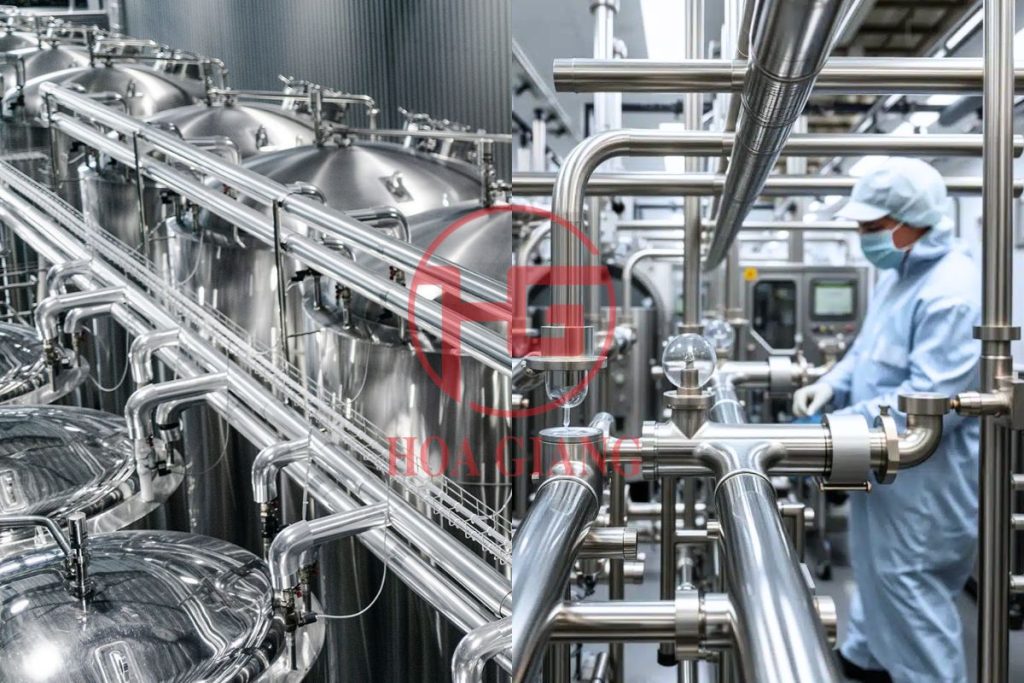
Practical applications of DIN standard sanitary stainless steel.
Food & Beverage (F&B) Industry
In food and beverage processing, ensuring food safety and hygiene is a vital requirement; therefore, DIN-standard microbiological tubing is widely used in critical areas.
- Conveyor belts for fresh milk, soft drinks, and fruit juices.
- Fermentation systems, pipelines for bottling beer, wine, and soft drinks.
- A container for spices, cooking oil, and sauces.
Pharmaceutical & Healthcare Industry
In pharmaceutical manufacturing environments, stringent aseptic standards require the use of DIN stainless steel fittings to minimize the risk of cross-contamination.
- Tubing for transporting distilled water for infusion.
- Production line for liquid medicines, syrups, vaccines, and biological extracts.
Cosmetics industry
In the personal care product manufacturing industry, DIN standard stainless steel equipment is used in the production lines of creams, shampoos, body washes, and household detergents.
Pure water treatment system
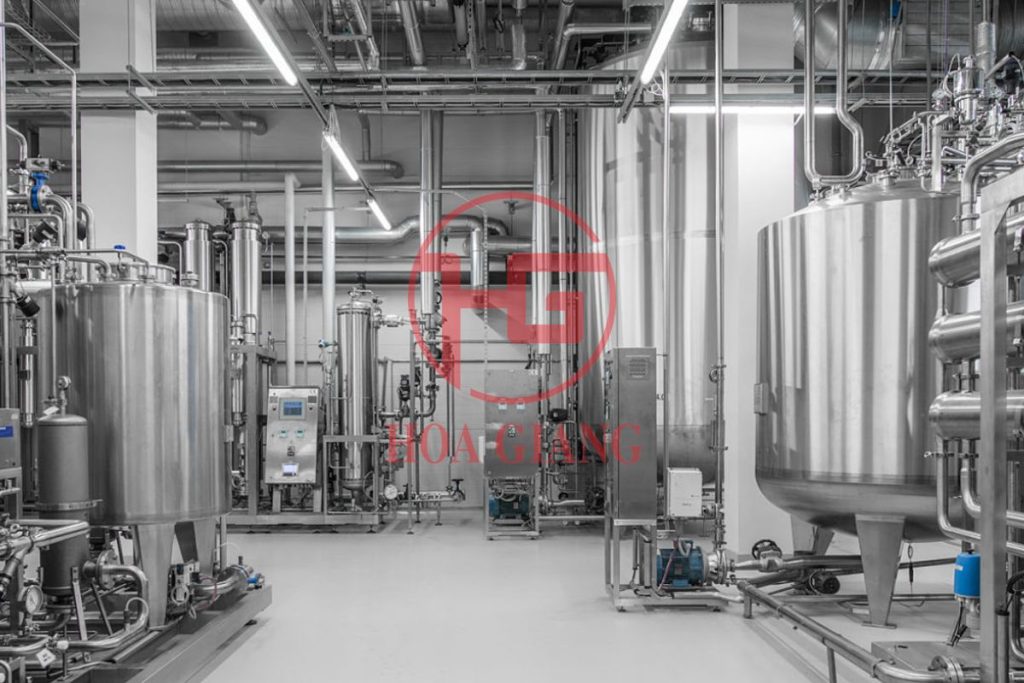
DIN standard stainless steel sanitary system at the pure water plant.
For high-tech industries requiring absolutely pure input water, DIN standard pipes and fittings play a crucial role in maintaining water quality throughout the circulation process and are used in RO and DI water pipelines in electronics component factories and clean rooms.
FAQ – Frequently Asked Questions About DIN Standards
What are the DIN standards?
DIN stands for Deutsches Institut für Normung, the German Institute for Standardization. It is the organization responsible for developing and publishing technical standards widely applied across various industrial sectors.
What is DIN certification?
DIN certification is documentation confirming that a product or material complies with the technical requirements of a specific DIN standard. For hygienic stainless steel products, it is important to identify the specific DIN standard applicable to the product to accurately assess its compliance.
What is DIN 11850?
DIN 11850 is a standard that specifies the dimensions and requirements for stainless steel tubes used in hygienic piping systems. It is widely applied in the food and beverage industry and other hygienic stainless steel applications.
What type of stainless steel is commonly used for DIN-compliant hygienic applications?
Hygienic stainless steel products manufactured to DIN standards commonly use grades such as 304, 304L, 316, and 316L. Among these, 316L offers superior corrosion resistance and is suitable for applications with stringent hygiene requirements, including pharmaceutical, cosmetic, and biotechnology industries.
Is DIN the same as ASME BPE?
No. DIN and ASME BPE are different standards with distinct specifications, technical requirements, and application scopes. DIN standards are widely used for stainless steel piping systems based on European specifications, while ASME BPE focuses primarily on pharmaceutical, biotechnology, and other high-purity applications with stringent hygienic requirements.
Hoa Giang – A leading and reputable supplier of DIN-standard sanitary stainless steel in Vietnam.
With nearly 20 years of sustainable development in the field of supplying industrial and microbiological stainless steel materials, Hoa Giang Stainless Steel are proud to be a strategic partner and exclusive distributor of the sanitary stainless steel brand GHWA (Thailand) in the Vietnamese market.
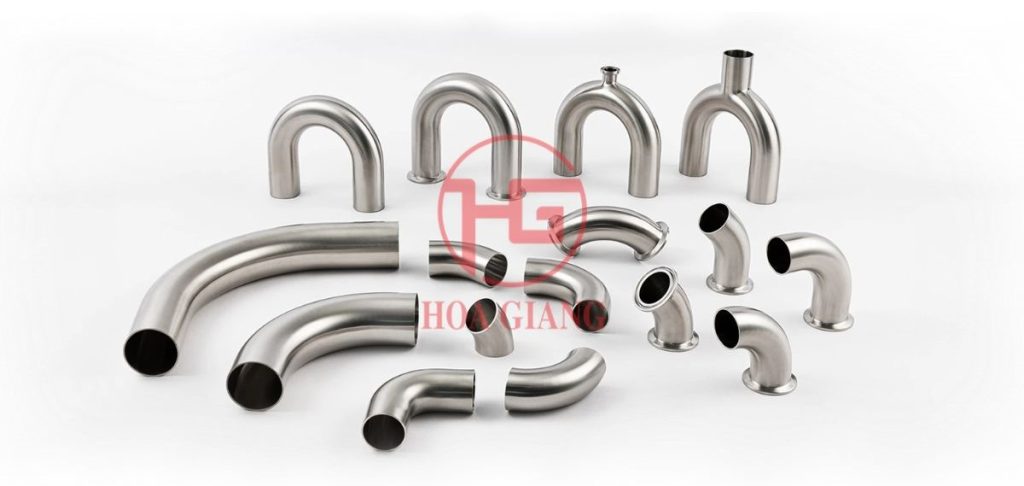
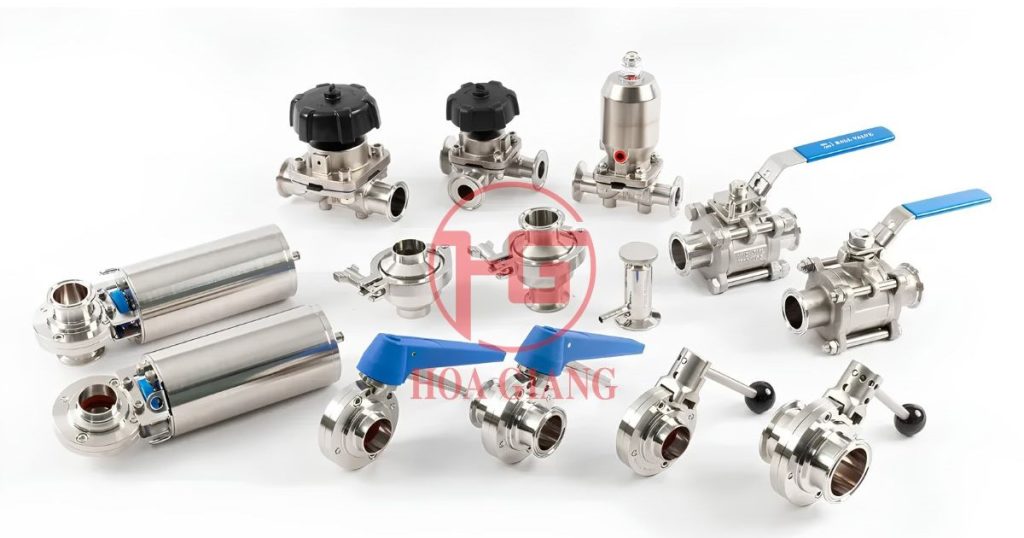
Sanitary stainless steel supplied by Hoa Giang
We specialize in providing comprehensive solutions for sanitary stainless steel piping and fittings that meet standards DIN, SMS, ASME BPE with outstanding commitments:
- International quality standards: The pipes, valves, welded fittings, couplings, clamps, etc., have a perfect surface finish and are manufactured from high-quality 304 and 316L stainless steel.
- Fully legally certified: The product has full certificates of origin (CO), certificates of quality (CQ), and technical inspection results.
- Professional service: We provide rapid and synchronized solutions for projects of all scales, from food processing lines, breweries, and dairy plants to demanding pharmaceutical systems.
Conclude
Clearly understand What is the DIN standard? As well as relevant technical specifications, this will help businesses, investors, and engineering teams accurately select the appropriate stainless steel sanitary equipment system, optimize operating costs, and ensure absolute safety for the production process.
If you are looking for high-quality, DIN-compliant stainless steel sanitary piping solutions for your project, please contact us immediately Hoa Giang Stainless Steel contact our team of expert technicians for in-depth technical advice and the best price quote!
Address: 19 Bach Dang Street, Tan Son Hoa Ward, Ho Chi Minh City
Phone: (028) 38485518~9
Facebook: Hoa Giang Stainless Steel