


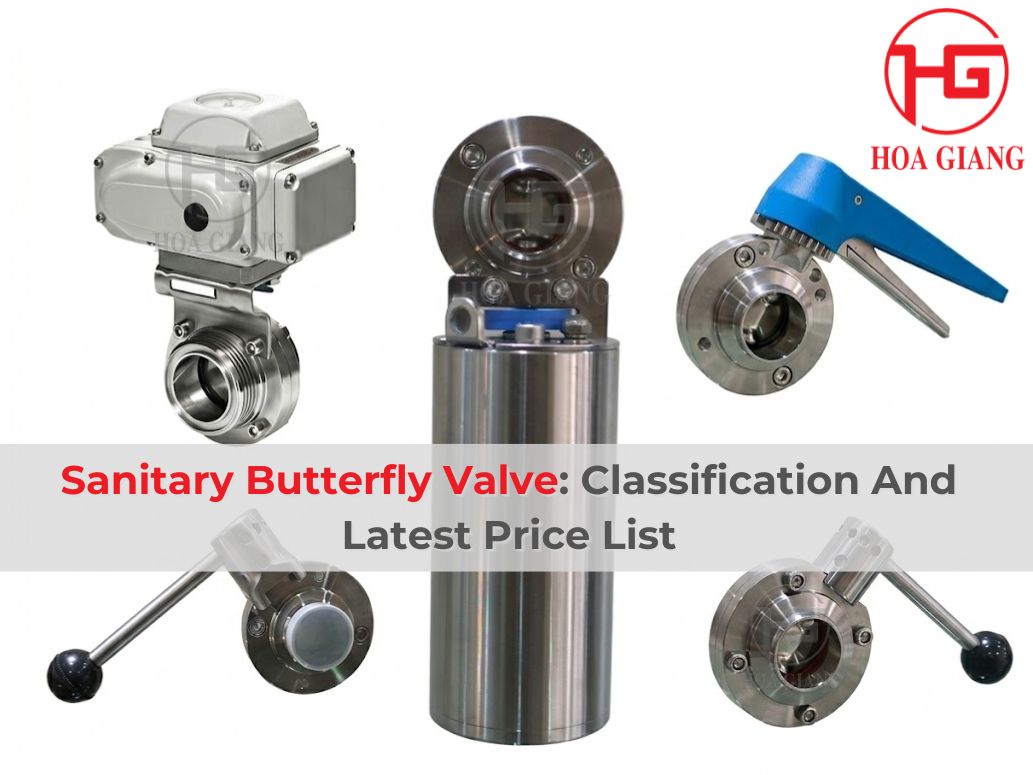
In industrial piping systems requiring absolute hygiene and safety standards, such as those for food, pharmaceuticals, alcoholic beverages, and cosmetics, sterile flow control is crucial to product quality. To meet these stringent requirements, conventional industrial valves are ineffective due to numerous blind spots where bacteria can easily accumulate. This is why stainless steel sanitary butterfly valves were developed and have become mandatory equipment in all sterile production processes.
This article by Hoa Giang will provide you with a comprehensive overview, from detailed structure and common types to the latest price list from Hoa Giang Stainless Steel, a reputable authorized distributor in Vietnam.
Detailed structure of stainless steel sanitary butterfly valve
To ensure reliable operation in highly corrosive fluid environments or rigorous cleaning-in-place (CIP/SIP) cycles, sanitary butterfly valves possess a minimalist structure yet achieve extremely high mechanical precision.
– Valve body: Cast as a single piece from high-grade stainless steel such as Inox 304 or Inox 316L. The core difference lies in the surface: the valve body undergoes mechanical and electrochemical polishing, achieving a standard surface finish of Ra < 0.8µm (or Ra < 0.4µm for the high-purity segment), which minimizes microbial adhesion.
– Valve disc/Butterfly: This is the part that rotates 90 degrees within the valve body to perform the function of opening, closing, or regulating flow. The valve disc has a thin profile and is smoothly polished at all edges to optimize flow and minimize pressure loss.
– Gaskets: Responsible for completely blocking the flow of fluid, ensuring 100% airtightness. Depending on the temperature and chemicals, gaskets will be manufactured from specialized FDA-certified materials such as silicone, EPDM, PTFE, or FPM for harsh conditions.
– Control unit: Transmits torque to rotate the valve shaft. Depending on the system’s operating requirements, this unit can be a mechanical lever, a multi-position pull handle, or automated mechanisms such as pneumatic/electric actuators.
Classification of common sanitary butterfly valves currently available.
To optimize investment costs and the compatibility of electromechanical systems, these devices are usually classified according to two core criteria:
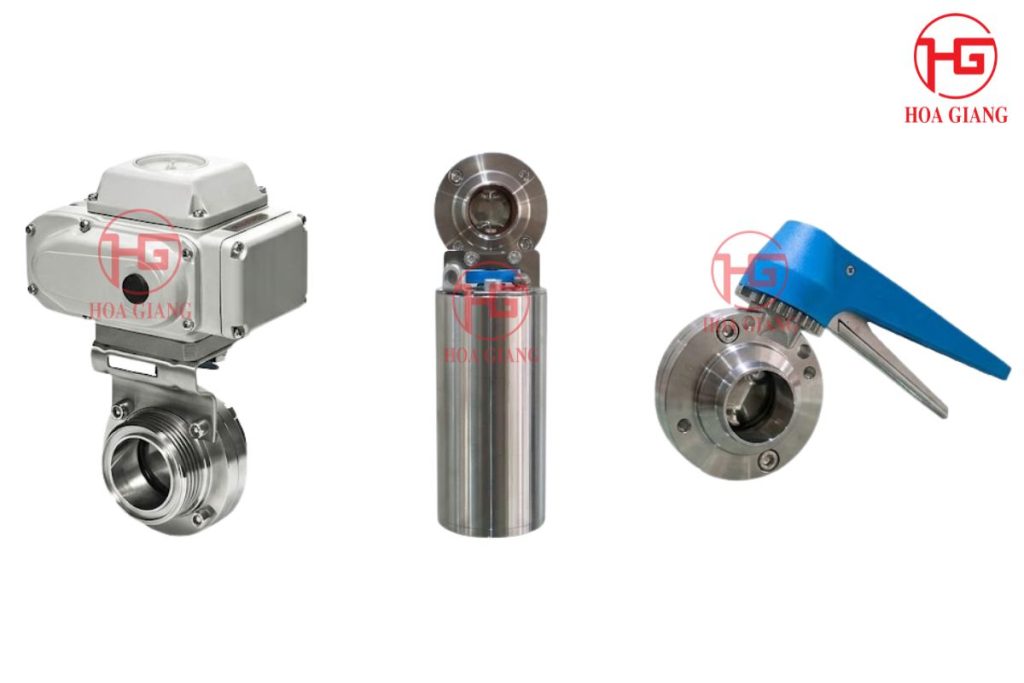
Hoa Giang offers various types of sanitary butterfly valves.
1. Classification by operating method
– Pneumatically actuated sanitary butterfly valves: These devices integrate a pneumatic cylinder head (single-acting or double-acting). Their outstanding advantages include extremely fast opening and closing speeds (only 1-2 seconds), absolute safety against fire and explosion hazards, and easy connection to a PLC control panel for automated system operation.
– Electrically actuated sanitary butterfly valve: Uses an electric motor (24V, 220V, or 380V) to operate the valve shaft. Electric valves operate very smoothly, have high torque, and are capable of precisely controlling the linear opening angle to regulate flow rate.
– Manual/Push-Handle Sanitary Butterfly Valves: This is the most economical manual solution. The valve uses a lever made of stainless steel or high-grade plastic to move the valve disc. The pull-handle type allows the valve disc to be positioned at various opening angles (usually 4 fixed angles). This type of valve is suitable for low-level pipeline locations, easily accessible areas, and where the opening and closing frequency is not too frequent.
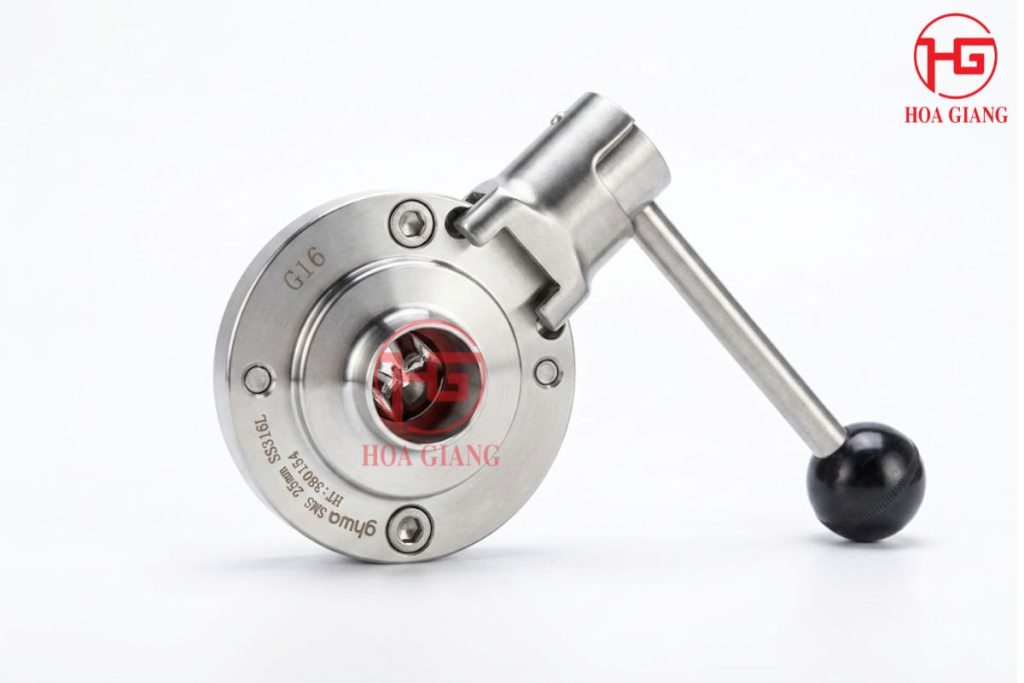
Welded pull-out butterfly valves supplied by Hoa Giang.
2. Classification by connection type
– Welding type: Both ends of the valve body are beveled for direct welding to the sanitary stainless steel pipeline. This connection type completely eliminates mechanical joints, removes 100% of “dead corners,” absolutely prevents bacterial buildup, and withstands the highest system pressure.
– Clamp quick-connect type: The valve body connects to the pipe using a clamp and gasket assembly. This type of connection is preferred in the dairy, beer, and beverage industries due to its extremely quick disassembly and manual cleaning capabilities, requiring no specialized tools.
– Threaded/Flexible connection type: Both ends of the valve are threaded or have integrated union fittings according to DIN or SMS standards, allowing for flexible connection to segmented pipe sections.
>> Click to view details of the types Sanitary Butterfly Valve
Outstanding Advantages and Practical Applications
1. Why should you choose GHWA sanitary butterfly valves distributed by Hoa Giang?
While there are many brands producing microbiological equipment on the market today, the GHWA brand products, exclusively distributed by Hoa Giang, remain the top choice for major contractors due to:
– Material purity: The product meets international standards for nickel and chromium content, ensuring that the 316L stainless steel valve series offers absolute resistance to pinhole corrosion and rust in food-grade acidic environments or liquid chlorine.
– Smart design with no dead corners: Ensures continuous fluid flow, preventing the accumulation of old solution after each production batch, perfectly meeting EHEDG and 3A standards.
– Superior mechanical durability: Precision CNC-machined drive components minimize friction with the gasket, extending gasket life by twice as long compared to other valves on the market.
2. Applications in sterile industries
Thanks to stringent quality certifications, sanitary butterfly valves are widely used in:
– The storage tank and pipeline systems of milk, ice cream, and yogurt production plants.
– Production lines for brewing beer, filtering beer, and bottling soft drinks and fruit juices.
– Water for injection (WFI) dispensing system, RO filtration system, and pharmaceutical mixing tanks.
– The cosmetics and personal care industry produces products such as perfumes, skin creams, and shampoos.
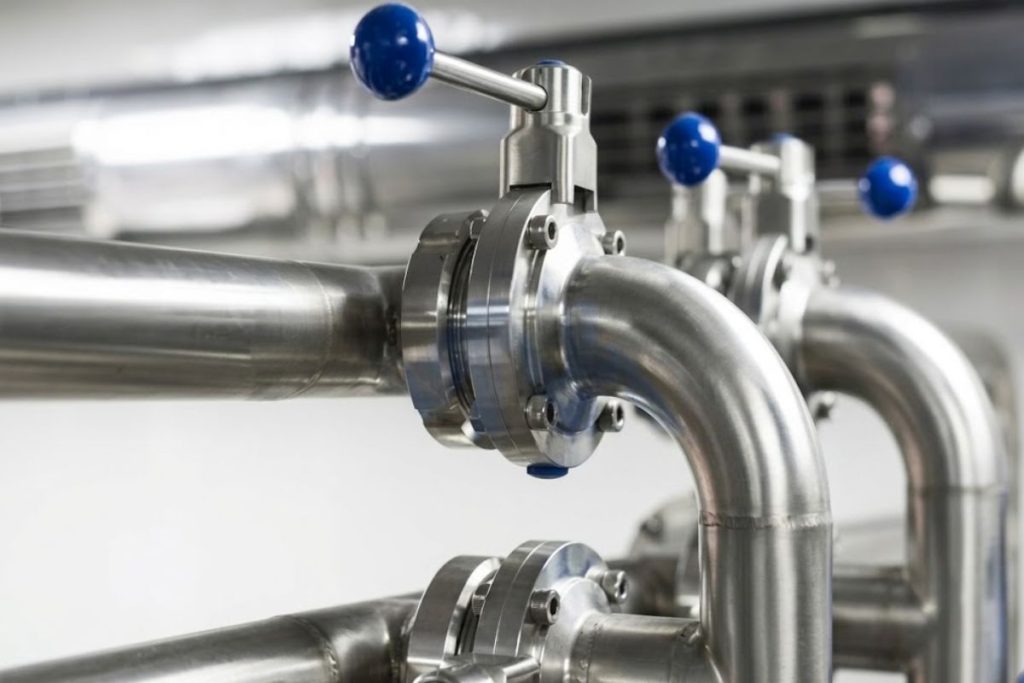
Sanitary stainless steel is widely used in dairy factories.
Latest price list for stainless steel sanitary butterfly valves
The cost of a sanitary butterfly valve set depends on the pipe size (DN), material grade (Stainless steel 304 is cheaper than Stainless steel 316L), connection type, and origin of the automation actuator.
Important Note: Prices for microbiological components may fluctuate depending on order volume, accessory integration requirements, and global steel price fluctuations. To receive the most accurate price quote with attractive trade discounts for your project, please contact our Hotline directly.
>> Contact Detailed price quotation
Instructions for proper installation and maintenance of sanitary butterfly valves.
Infections or fluid leaks largely stem not from valve quality but from improper installation and operation procedures.
– Before installation: The inside of the pipe must be thoroughly flushed to completely remove iron filings and welding slag generated during construction. When welding valves, it is mandatory to detach the valve body (especially the rubber gasket) from the welding housing to prevent the heat from the weld from melting or deforming the ga
– Regular maintenance: Schedule regular inspections (every 6 or 12 months depending on the CIP frequency). Replacing the gasket on sanitary butterfly valves is simple; just loosen the valve body bolts or remove the clamp to access it.
Conclude
Investing in a technically sound stainless steel sanitary butterfly valve system not only helps businesses protect their production lines from the risk of mass bacterial contamination but also optimizes long-term operating costs for the factory.
Hoa Giang Stainless Steel is proud to be the exclusive and sole distributor of the brand of sanitary ware accessories GHWA In Vietnam, we are committed to providing 100% genuine products with full CO/CQ certificates proving origin and FDA certification for food safety.
For consultation or to receive the most favorable commercial price quote, please contact Hoa Giang today.
Address: 19 Bach Dang Street, Tan Son Hoa Ward, Ho Chi Minh City
Phone: (028) 38485518~9
Facebook: Hoa Giang Stainless Steel