


Sanitary stainless steel forms the foundation for pharmaceutical production systems that achieve high purity and sterility. However, not all types of stainless steel meet the industry’s stringent requirements. Behind every pipeline, tank, or microbiological equipment are a series of technical criteria regarding steel grade, surface finish, finishing process, and manufacturing standards that not all businesses fully understand.
So what are the factors that make a stainless steel material meet the standards for the pharmaceutical industry? In this article, Hoa Giang will explore the important criteria, from selecting the stainless steel grade and surface treatment to international standards that meet the industry’s stringent requirements.
Why is choosing the right type of sanitary stainless steel for the pharmaceutical industry important?
In the pharmaceutical industry, the quality of materials in direct contact with raw materials and finished products affects the entire production process. Even a single surface that is not smooth enough or has microscopic gaps can become a breeding ground for dirt and microorganisms, increasing the risk of cross-contamination and impacting product quality.
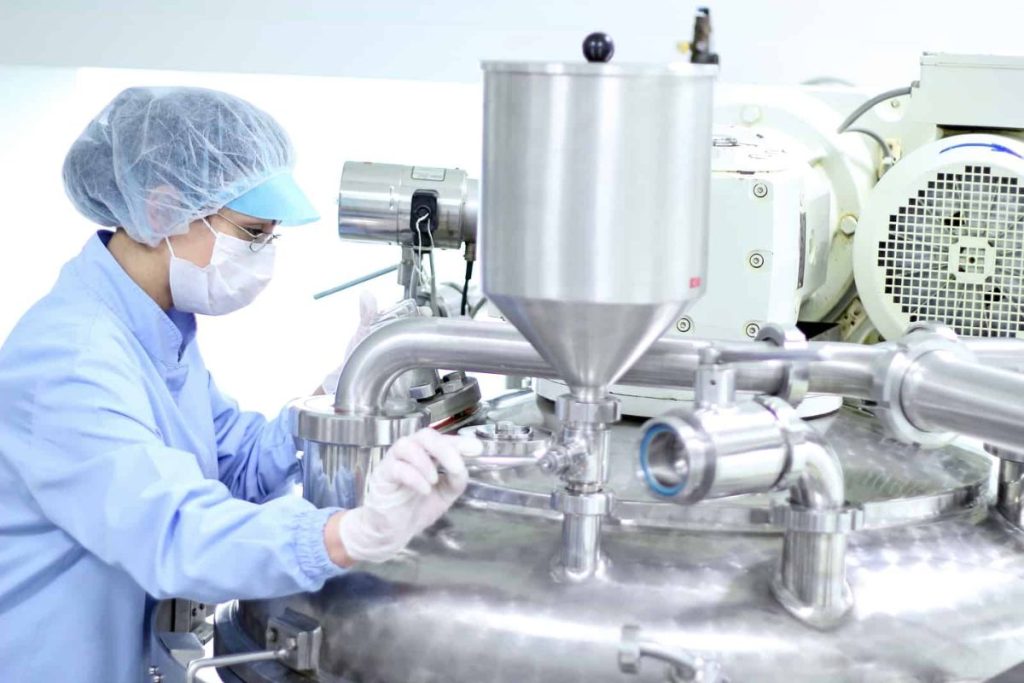
The pharmaceutical industry demands high standards when selecting materials.
Therefore, stainless steel for sanitary use The selection criteria are not only based on rust resistance but also must simultaneously meet multiple requirements regarding cleanliness, hygienic properties, chemical corrosion resistance, and stability under continuous operation.
Choosing the right materials from the start will help businesses:
- Ensuring hygiene standards in pharmaceutical manufacturing.
- Reduce the risk of infection and cross-contamination.
- Increase the lifespan of the equipment system.
- Reduce maintenance and replacement costs.
- Meets international certification standards.
Criteria for selecting microbiological equipment and accessories
The entire pharmaceutical delivery system is composed of numerous technical components. The selection of these components requires strict adherence to the following principles:
1. Connection standards and system compatibility
Automated TIG welding method (Orbital Welding): Applicable to fixed joint locations. Microbiological welds must be uniform, smooth, free of slag or grooves, and the weld surface must be polished to prevent localized corrosion.
Quick-connect Clamp (Tri-clamp / Ferrule / Stainless steel clamp): This is a superior method for locations requiring frequent disassembly for inspection or cleaning. The clamp joint needs to have high dimensional accuracy to avoid creating flow obstructions.
Union Connector: Provides a strong, tight seal under the influence of pressure and mechanical vibration.
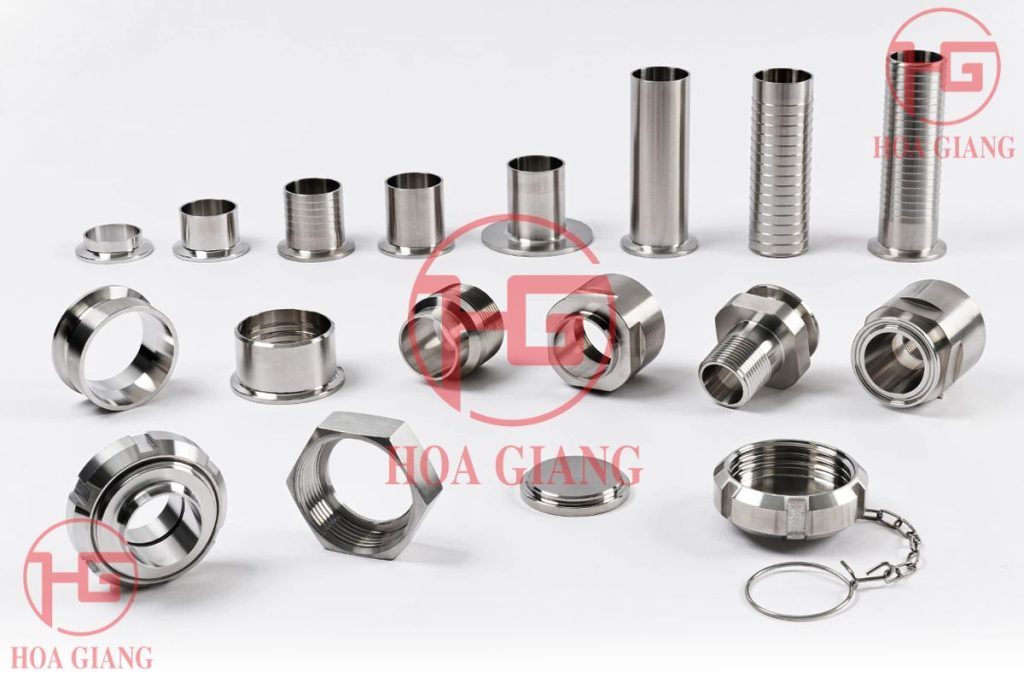
Sanitary stainless steel supplied by Hoa Giang
2. Automatic cleaning capability (CIP/SIP)
All stainless steel sanitary fittings installed in pharmaceutical production lines must meet the following requirements:
CIP (Cleaning in Place): The ability to clean in situ using a high-temperature chemical detergent circulation cycle without disassembling the system.
SIP (Sterilization in Place): Ability to withstand in-situ steam sterilization at high pressure and temperature.
Self-draining design: Optimize dead-legs or dynamic angles to ensure that all fluid drains completely after operation stops.
3. Standards for sealing materials (Gaskets/Seals)
The gaskets accompanying the Clamp or Union system come into direct contact with the pharmaceutical substance. Therefore, this elastic material must be certified as biocompatible and chemically inert, commonly including…EPDM, PTFE, Silicone, or Faculty of Public Health
Common mistakes when choosing sanitary stainless steel.
Many businesses still choose materials based primarily on cost, overlooking important technical factors.
Some common mistakes include:
- Focusing solely on the stainless steel grade while neglecting surface smoothness.
- Use industrial-grade stainless steel instead of sanitary-grade stainless steel.
- No inspection of production standards.
- Ignore the CO and CQ certificates.
- The quality of the welds and fittings is not being assessed.
These errors can increase maintenance costs, reduce system lifespan, and create difficulties during inspection or operation.
FAQ – Frequently asked questions on selection criteria for sanitary stainless steel
Sanitary stainless steel: how is it different from stainless steel used in microbiology?
Sanitary stainless steel has a higher surface smoothness, stringent welding requirements, manufacturing standards, and hygiene capabilities, making it suitable for industries requiring high levels of cleanliness such as pharmaceuticals, food, and biotechnology.
Should the pharmaceutical industry choose 304 or 316L stainless steel?
For general applications, 304 stainless steel is sufficient. However, for environments involving chemical exposure, CIP/SIP processes, or sterile pharmaceutical production, 316L stainless steel is the preferred choice.
Why is electrochemical polishing necessary?
Electrochemical polishing increases surface smoothness, enhances corrosion resistance, reduces the risk of deposits, and supports more effective cleaning compared to mechanical polishing.
Hoa Giang – A leading supplier of sanitary stainless steel in Vietnam.
With nearly 20 years of experience, Hoa Giang is the exclusive distributor of sanitary stainless steel products under this brand GHWA in Vietnam, we provide high-quality material solutions for the pharmaceutical, food, beverage, and biotechnology industries.
GHWA sanitary stainless steel products are manufactured using a rigorous process, meeting requirements for stainless steel grade, surface finish, and technical standards in the field of microbiology. The diverse product range includes pipes, tanks, valves, fittings, and various equipment serving production systems requiring high levels of cleanliness.
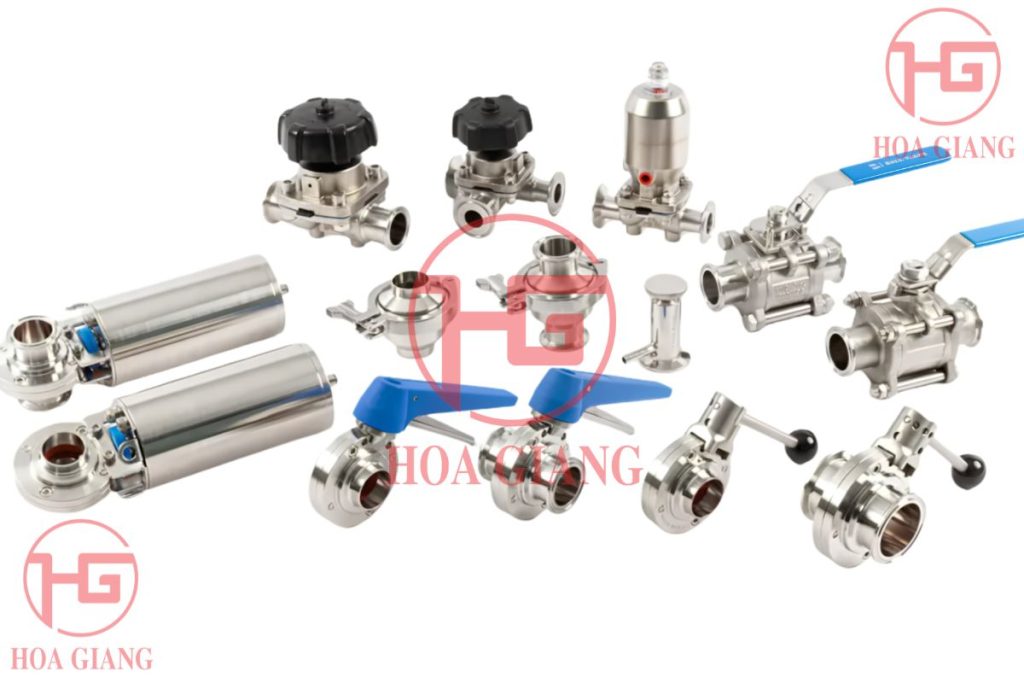
Hoa Giang provides sanitary stainless steel.
In addition to supplying products, Hoa Giang’s technical team is always ready to advise on solutions suitable for each production line, supporting businesses in selecting optimal materials in terms of investment efficiency, operational capabilities, and meeting the stringent hygiene requirements of the pharmaceutical industry.
Are you looking for a sanitary stainless steel solution for the pharmaceutical industry? Contact Hoa Giang for product selection advice.stainless steel for sanitary use Suitable for the technical requirements and production line of the enterprise.
Address: 19 Bach Dang Street, Tan Son Hoa Ward, Ho Chi Minh City
Phone: (028) 38485518~9
Facebook: Hoa Giang Stainless Steel