


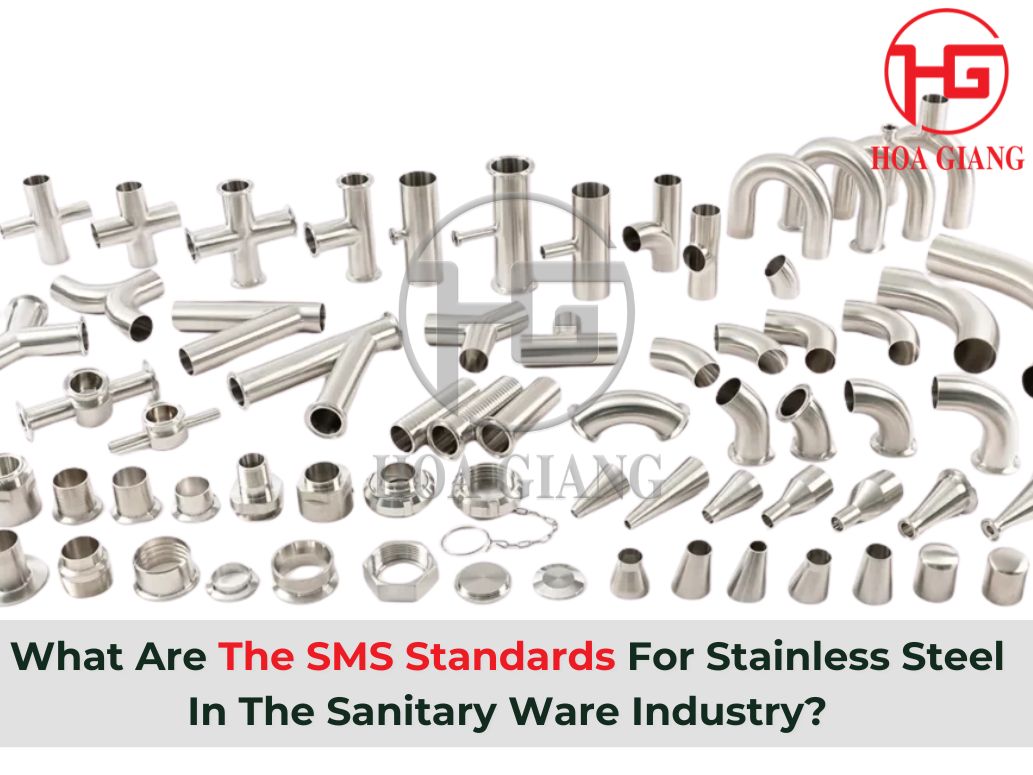
The SMS standard is one of the most commonly used connection standards in sanitary stainless steel piping systems today. However, not everyone fully understands what this standard is, in what situations it is applied, and why it is preferred in industries requiring strict hygiene standards such as food, dairy, beverages, pharmaceuticals, or cosmetics.
So what is the SMS standard? What are its key features and what benefits does it offer for sanitary stainless steel systems?
Join Hoa Giang in exploring the details in the article below to better understand the SMS standard and its important applications in modern production systems.
1. What is the SMS standard in sanitary stainless steel?
1.1 The concept of SMS standards
SMS standard is an abbreviation for Swedish Milk Standard (The Swedish Dairy Standard), researched and issued by the Swedish Dairy Processing Association, aims to create a uniform technical standard system for piping, fittings, and microbiological equipment in the dairy industry.
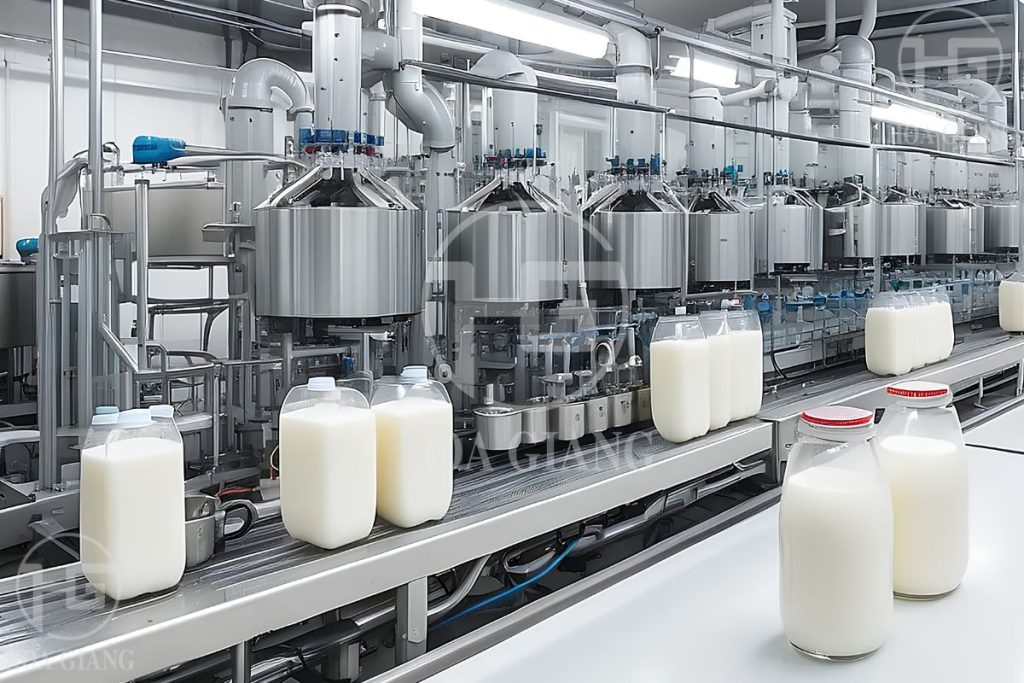
SMS standards in the dairy industry
1.2 Overview of SMS standards
Thanks to its flexibility, compact structure, and high reliability in terms of food hygiene and safety, the SMS standard quickly expanded beyond the Nordic dairy industry to become one of the most widely used global microbiological industry standards, particularly in production lines across Asia.
The essence of SMS standard sanitary stainless steel fittings and pipes lies in the fact that threaded connections (Unions), clamps, elbows, tees, valves, etc., are manufactured with high precision. The joint design has minimal clearance, completely eliminating “dead legs”—places where bacteria, food residue, or microorganisms can accumulate.
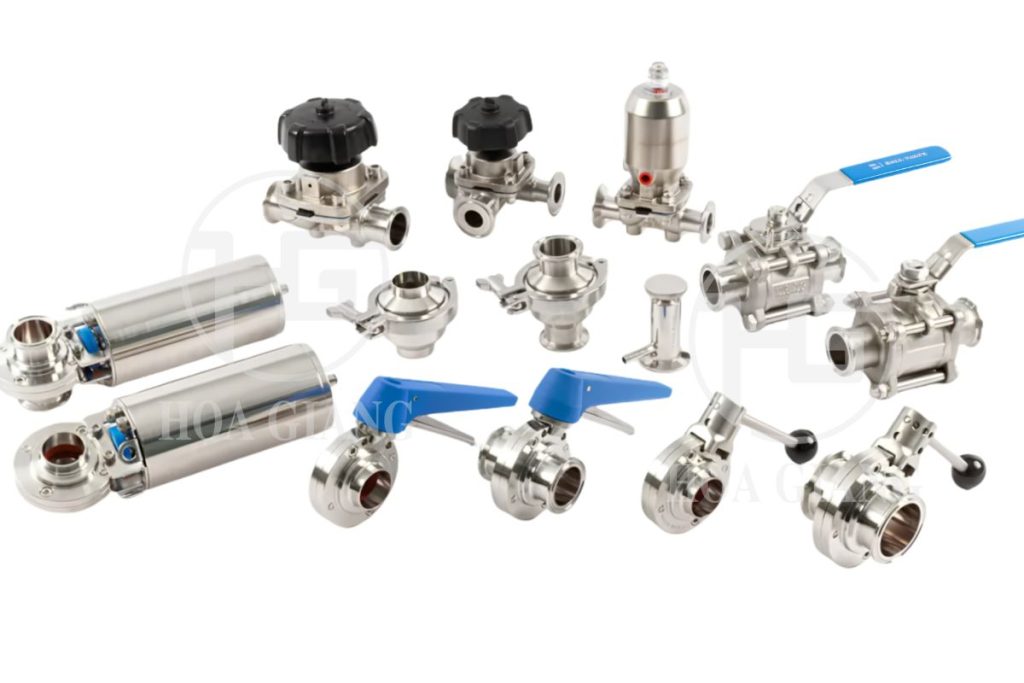
Sanitary stainless steel supplied by Hoa Giang
The materials used for standard SMS products mainly consist of two main types of stainless steel:
– Inox 304/ 304L:Suitable for most common food and beverage environments, with good chemical corrosion resistance and CIP temperature resistance.
– Inox 316/ 316L:The addition of molybdenum (Mo) maximizes corrosion resistance in environments containing chlorides, organic acids, pharmaceuticals, or high-concentration sterilization solutions.
2. Technical specifications of the SMS standard
2.1 Dimensions based on the Inch system
Unlike the German DIN system which uses round millimeters, the SMS system measures pipe diameters based on inch sizes (1″, 1.5″, 2″, 2.5″, 3″, 4″).
2.2 Surface finish quality
The distinguishing factor between SMS sanitary stainless steel and industrial stainless steel is its surface finish. The surface of SMS stainless steel must undergo a mechanical or electrochemical polishing process.
2.3 SMS Quick Connect System
SMS Union connectors consist of four main components: Liner (welding connector), Male part (external threaded end), Nut (screw nut) and Gasket.
4. Comparison of SMS and DIN standards
In the practical design and construction of factories, the two most common standards that are often confused are: SMS and FROM Confusion between these two standards can lead to mismatched threads, misalignment, or gasket leaks, causing fluid leakage.
| Comparison criteria | SMS Standard (Sweden) | DIN Standard (Germany) |
| Origin | Nordic (Sweden) – Optimized for fast operation, compact and lightweight design. | Germany / Europe – Robust design, high precision engineering standards. |
| Outer diameter (OD) | Measured in decimal places (e.g., 25mm, 38mm, 51mm, 63.5mm). | Calculated using round numbers DN (Example: DN25 = 28mm, DN40 = 40mm, DN50 = 52mm). |
| Pipe wall thickness | Typically thinner and lighter: 1.25mm – 1.6mm – 2.0mm. | Thicker: 1.5mm – 2.0mm – 2.5mm depending on the series (DIN Range 1, 2, 3). |
| Union characteristics | Thinner hexagonal nuts with a characteristic SMS square thread pitch. | Nuts with round, grooved joints, DIN round/coarse thread pitch. |
5. Applications of microbiological equipment and accessories in Vietnam
Thanks to its easy assembly and disassembly, high sealing efficiency, and ability to meet stringent hygiene and safety criteria, the SMS standard is now present in most modern production lines:
– Dairy and Dairy Products Manufacturing Industry: Fresh milk receiving line, UHT sterilization system, yogurt fermentation tank, aseptic packaging machine.
– Liquid Food Processing Industry: Pipelines for sauces, syrups, spices, cooking oil, and a high-end fish sauce processing plant.
– Beverage, Beer & Wine Industry: Automatic bottling line, beer filtration system, fresh fruit juice storage tanks.
– Pharmaceutical and Biotechnology Industry: Pure water supply system (RO/WFI), intravenous fluid lines, and aqueous drug solution lines.
– Cosmetics Industry: Production line for skin cream, shampoo, perfume, and toothpaste.
6. Where can I buy reliable stainless steel sanitary pipes and fittings?
To ensure stable and uninterrupted operation of the production line due to leaks or pipeline contamination, choosing a reputable supplier of genuine sanitary stainless steel materials is crucial.
Hoa Giang is proud to be a pioneering company with nearly 20 years of in-depth experience in the import and distribution of high-quality sanitary stainless steel materials in Vietnam.
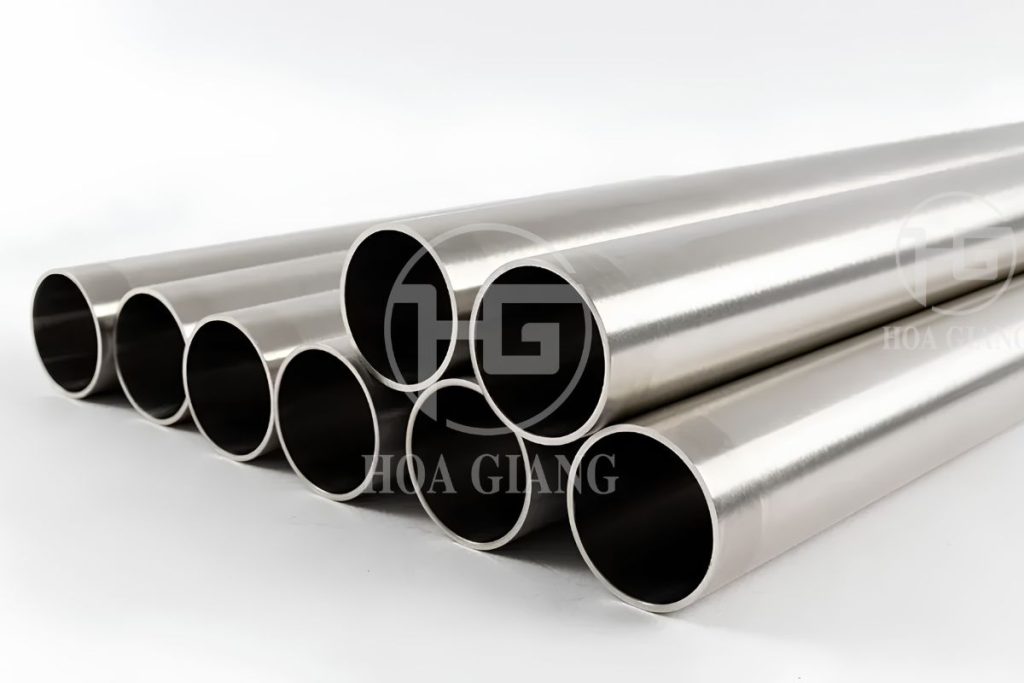
Stainless steel sanitary pipes supplied by Hoa Giang.
Hoa Giang – the exclusive distributor of the GHWA brand in Vietnam.
Hoa Giang is the authorized distributor EXCLUSIVE and UNIQUE of the brand GHWA (Thailand)– A leading European-standard sanitary stainless steel manufacturing plant in the region. All GHWA products supplied by Hoa Giang are guaranteed:
– Complete with Certificate of Origin (CO), Certificate of Quality (CQ), and food safety and hygiene inspection certificates.
– Meets surface finish standards according to SMS, DIN, and 3A dimensions.
– Our large warehouse in Ho Chi Minh City always has in stock: sanitary tubing, elbows, tees, reducers, SMS unions, clamps, sanitary butterfly valves, diaphragm valves, sight glasses, CIP balls, etc.
Address: 19 Bach Dang Street, Tan Son Hoa Ward, Ho Chi Minh City
Phone: (028) 38485518~9
Facebook: Hoa Giang Stainless Steel